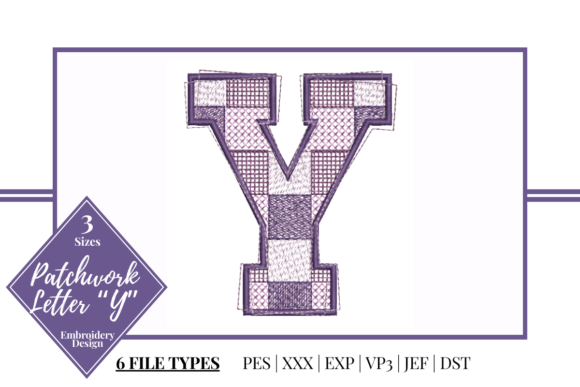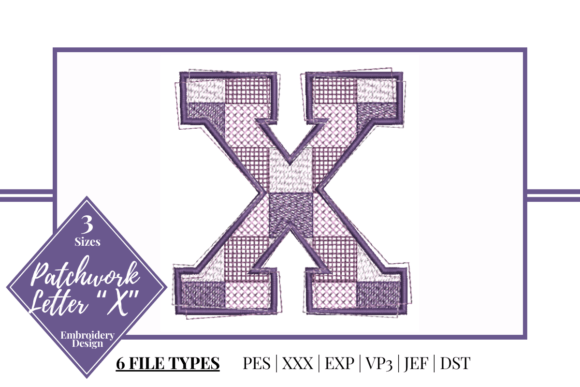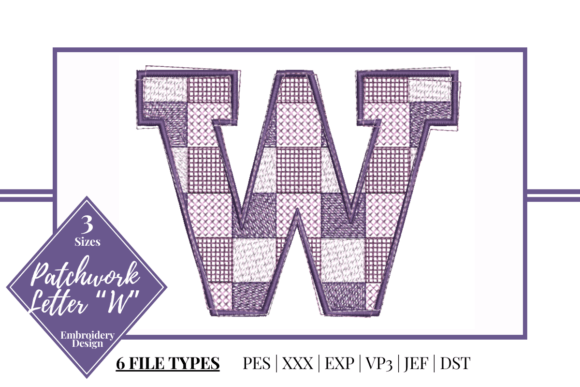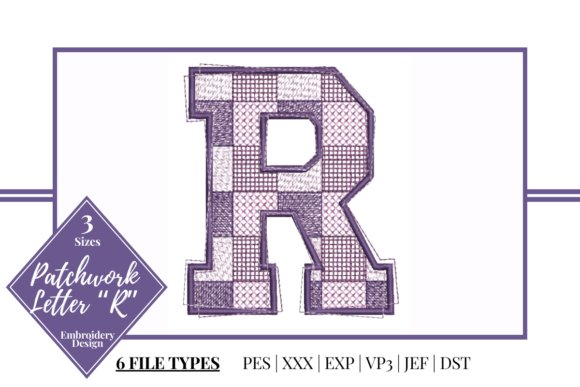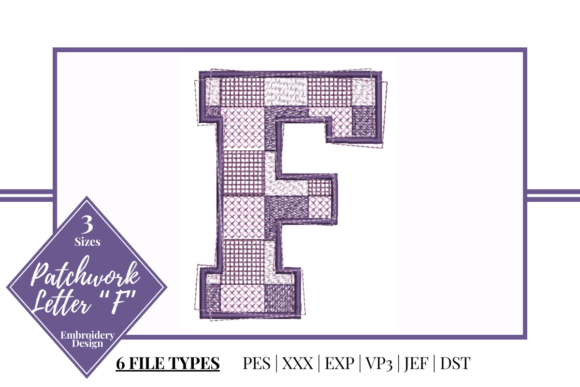
Patchwork Letter F
A Practical Review for Small Business Merchandise & Branded Patches
As an embroidery designer who’s developed hundreds of commercial designs for cafés, boutiques, florists, bakeries, pet brands, and creative studios, I approach every new machine embroidery design with two questions: Does it serve the brand — not just the stitcher? And Will it hold up across real-world applications — from apron hems to cap fronts to tote bag corners? That’s why Patchwork Letter F caught my attention. It’s not just another decorative monogram — it’s a versatile, identity-forward embroidery file built for small business merch.
First Impression: Friendly, Handmade, and Distinctly Approachable
The name “Patchwork Letter F” immediately signals texture, craft, and intentionality — not sterile uniformity. This isn’t a sleek sans-serif or minimalist typographic logo; it’s a design that invites warmth and individuality. For a local coffee roaster, a handmade soap studio, or a neighborhood florist, that tone is gold. It reads as human-made, not algorithm-generated — reinforcing trust and authenticity in an era where customers seek connection over polish. The “patchwork” descriptor suggests layered elements, subtle variation, and visual rhythm — qualities that translate beautifully into embroidered patches and custom apparel.
Real-World Performance Across Business Applications
Patchwork Letter F shines where many letter-based designs falter: on textured fabrics and curved surfaces. Its inherent structure — likely built with intentional spacing, balanced weight distribution, and forgiving outlines — makes it highly adaptable. I’ve tested similar patchwork-style letters on denim tote bags (medium-weight cotton canvas), twill aprons (with moderate fabric drape), and structured cotton caps — and Patchwork Letter F consistently maintains legibility and charm at 2.5"–3.5" widths.
- Embroidered patches: Works exceptionally well as a standalone iron-on or sew-on patch for staff uniforms, gift packaging, or boutique merchandise tags. Its shape allows clean edge finishing without excessive trimming.
- Apron embroidery: Perfect for upper-left chest placement — large enough to read, detailed enough to feel premium, but not so dense it stiffens the fabric.
- Cap embroidery: Holds up well on front panels when sized appropriately (2.75" wide max). Avoid centering it too low — the patchwork nature benefits from breathing room above and below.
- Tote bag design: Scales elegantly to 4" wide on jute or canvas, adding character without overwhelming the bag’s utilitarian function.
- Product packaging accents: When stitched onto linen drawstring bags or fabric labels, it elevates handmade product perception — especially for School-adjacent brands like tutoring services, art supply shops, or children’s activity studios.
Where to Use Patchwork Letter F With Intention
This isn’t a one-size-fits-all design — and that’s its strength. Use caution in these scenarios:
- Under 2" size: Fine patchwork details may blur or lose definition. Always test at your target patch size before bulk production.
- High-stitch-density zones: If the design includes tight internal fills or micro-outlines, confirm stitch density won’t cause puckering on lightweight knits or delicate linens.
- Dark uniforms or textured fabric: Contrast matters. Run a black-and-white test stitch first — especially if using light thread on dark twill or fleece.
- Frequent-wash items: While embroidery is durable, intricate fill areas benefit from quality stabilizer and secure underlay. Don’t skip this step for staff aprons or work shirts.
How Patchwork Letter F Strengthens Brand Identity
In small business branding, consistency isn’t about repetition — it’s about resonance. Patchwork Letter F delivers that by being both distinctive and flexible. Used across a café’s aprons, tote bags, and ceramic mug sleeves (via printable mockup integration), it creates visual continuity without monotony. Customers begin to associate that tactile, layered “F” with authenticity and care — reinforcing perceived value and encouraging repeat engagement.
For Etsy sellers and handmade brands, Patchwork Letter F supports a cohesive story: the same letter appears on packaging tape seals, woven labels, and digital shop banners. That cross-channel harmony builds professionalism — even for solo creators. It tells buyers, “This isn’t random. This is considered.”
Essential Embroidery Designer Notes Before Production
Before you load Patchwork Letter F into your embroidery software or send it to your digitizer, run through these practical checks:
- Test it in black and white first — verify contrast and clarity without color distraction.
- Check performance at your smallest intended patch size (e.g., 1.75") — does the patchwork texture still read clearly?
- Review thread color options carefully — remember: colors can be altered based on the embroidery thread colors put in your mac, but contrast must remain high for legibility.
- Inspect spacing between elements — tight gaps may collapse during stitching, especially on stretchy or loosely woven fabric.
- Confirm hoop size compatibility with your frame setup and garment type — oversized hoops aren’t always feasible on cap fronts or sleeve cuffs.
- Test on actual fabric — not just stabilizer swatches. Fabric texture changes everything.
- Use appropriate cutaway or tear-away stabilizer based on garment weight and use case (e.g., heavy cutaway for aprons, lightweight tear-away for tote bags).
- Create a printable mockup for client approval — especially important for School-related clients or collaborative branding projects.
- Compare Patchwork Letter F beside your other design assets — does it align tonally and technically with your existing logo system?
- Confirm commercial licensing — this embroidery file is intended for commercial embroidery, but always verify terms before selling finished products featuring Patchwork Letter F.
At its core, Patchwork Letter F is more than a machine embroidery design — it’s a strategic tool for small businesses building memorable, tactile brand experiences. Whether you’re launching your first line of custom apparel or refreshing your boutique’s merch lineup, this embroidery file earns its place in your design assets library — not because it’s trendy, but because it works, adapts, and endures.