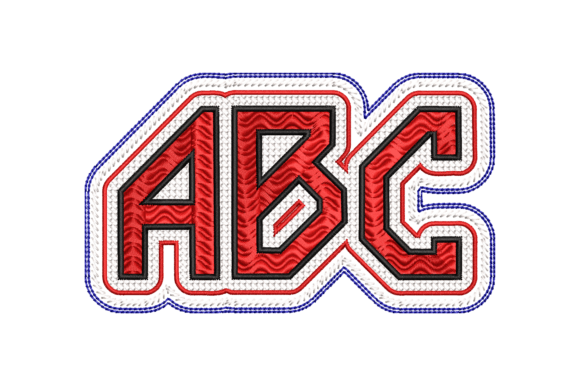
ABC Embroidery Design Review
First Impression: Elegant, Approachable, and Professionally Handcrafted
As an embroidery designer who’s developed hundreds of commercial designs for small businesses—from neighborhood bakeries to indie florists and creative studios—my first read on ABC is immediate and intuitive: it feels like a quiet statement of confidence. The phrase “an art form that can elevate any fabric, adding a touch of elegance and charm” isn’t marketing fluff—it signals intentionality. This isn’t a cluttered or overly literal design; it leans into refined simplicity, making it ideal for brands that value authenticity without sacrificing polish. Whether you’re a handmade product studio, a local café, or a boutique school supply shop (given its School category), ABC reads as both timeless and warmly human—not sterile, not childish, not trendy in a fleeting way.
Real-World Business Performance Across Merchandise Types
ABC shines where clarity and character matter most: embroidered patches, chest logos, cap fronts, apron accents, and tote bag branding. Its balanced composition holds up beautifully at 2.5–3 inches wide—the sweet spot for custom apparel and small business merch. On staff uniforms, it communicates cohesion without shouting; on a canvas tote, it adds subtle authority and charm. For a pet brand or florist, it reads as artisanal but trustworthy. For a school-affiliated boutique or after-school program, it carries warmth and structure—ideal for aprons worn by instructors or embroidered labels on handmade craft kits.
Because ABC emphasizes elegance over complexity, it translates well across varied substrates: twill caps, cotton aprons, linen tote bags, and even lightweight denim jackets. It avoids fine interior details that collapse under stitch density—meaning fewer thread breaks, smoother runs on commercial embroidery machines, and consistent results across batches. That reliability is critical when you're producing 50+ units for event merch, Etsy launch bundles, or wholesale orders.
Where to Use ABC Thoughtfully—Not Everywhere
While versatile, ABC isn’t universally forgiving. Avoid scaling it below 1.75 inches without testing—tiny lettering or delicate outlines may blur on curved cap fronts or textured fabrics like heavy duck canvas or fleece-lined hoodies. If your small business uses dark uniforms (navy, charcoal, black), confirm thread color contrast early: light ecru or soft gray may vanish without a backing stabilizer or tone-on-tone reinforcement. Also, watch for high stitch density in tight curves—if the description hints at “delightful” detail, inspect spacing between elements before digitizing. Tight kerning or thin connecting lines can pucker on stretchy knits or fray on raw-edged patches.
For schools or youth-focused brands, consider how ABC reads at arm’s length: does it retain legibility on a child’s backpack strap or a teacher’s sleeve? Does it complement—not compete with—existing design assets like logos, fonts, or brand colors? A strong embroidery file should enhance visual consistency, not dilute it.
Brand Identity Impact: More Than Just Stitching
Every time a customer sees ABC stitched onto a barista’s apron or a florist’s tote, they’re absorbing unspoken cues: care, craftsmanship, attention to detail. That builds trust faster than a slogan ever could. In competitive spaces like handmade markets or local retail, this kind of tactile professionalism elevates perceived product value—especially for Etsy sellers bundling embroidered goods with digital downloads or printable mockups. Customers don’t just buy a tote; they buy the feeling of supporting something thoughtfully made. And because ABC balances elegance with approachability, it supports brand identity across touchpoints: from packaging accents to event merch to staff-facing items that reinforce internal culture.
Practical Designer Notes Before You Digitize or Order
Before committing to production—or reselling ABC as part of your own embroidery service—run these checks:
- Test in black and white first. Eliminate color bias to assess contrast, balance, and silhouette clarity.
- Verify patch-size viability. Resize to 2 inches and 1.5 inches—does spacing hold? Do stems or connectors stay legible?
- Review thread color options. Not all palettes translate equally on dark or textured fabric. Prioritize mid-contrast tones unless going for intentional tonal subtlety.
- Inspect spacing and underlay. Tight letterforms or overlapping shapes need clean underlay to prevent gapping or distortion.
- Confirm hoop size compatibility. Will it fit comfortably in your standard 4x4 or 5x7 hoop? Larger hoops increase setup time and cost.
- Test on real fabric. Run a sample on your most common substrate—cotton twill, poly-cotton blend, or canvas—to gauge stitch tension and stabilizer needs.
- Use appropriate stabilizer. Tear-away works for stable wovens; cut-away or mesh is safer for knits or high-wear items like caps and aprons.
- Create a client-ready mockup. Show ABC on actual garment photos—not just flat vectors—to align expectations and reduce revision rounds.
- Compare beside existing design assets. Does it harmonize with your logo, typography, and brand palette—or does it clash or confuse?
- Confirm commercial licensing. Since this is intended for small business merch, custom apparel, and commercial embroidery, verify the digital embroidery file includes permission for resale, distribution, or client use. Don’t assume.
Final Thought: ABC Is a Strategic Asset, Not Just a Design
In a world flooded with generic clipart and AI-generated motifs, ABC stands out by honoring embroidery’s inherent tactility and intention. It doesn’t try to do everything—it does one thing exceptionally well: lend quiet distinction to everyday objects. For embroidery shops digitizing for local clients, for Etsy sellers building cohesive product lines, for schools launching branded gear, and for crafters elevating handmade product presentation, ABC is more than a machine embroidery design. It’s a tool for storytelling, consistency, and connection—one stitch at a time.